Why Choose Fake Trees for Global Sourcing?
Global buyers are rethinking seasonal merchandise as shoppers demand consistency, durability, and easier storage. Grand View Research valued the global artificial Christmas tree market at approximately USD 2.68 billion in 2022. It also projected a 4.3% compound annual growth rate from 2023 to 2030. These figures suggest steady commercial potential, not a temporary holiday trend.
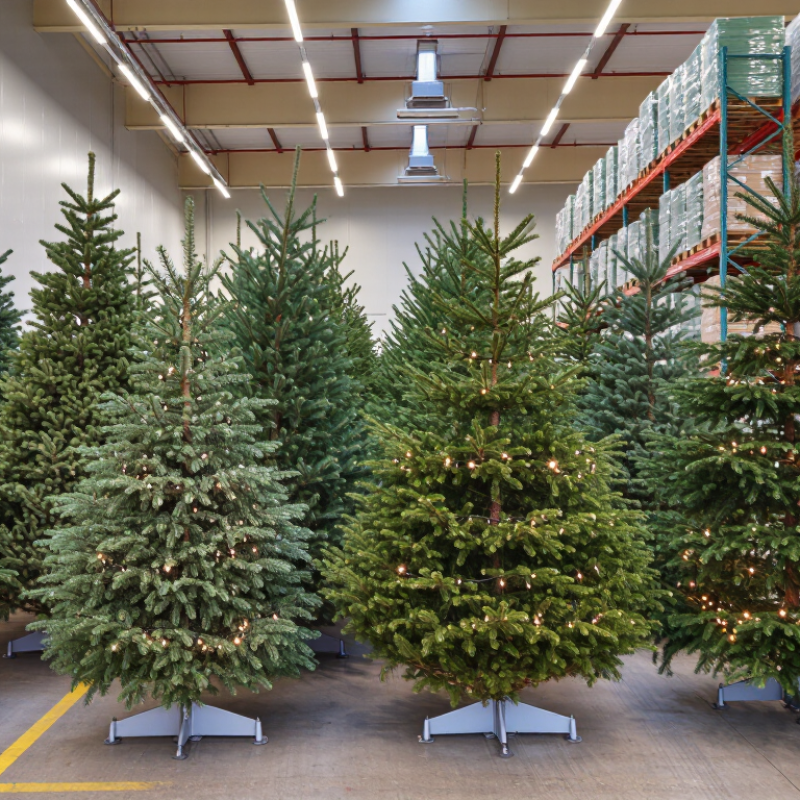
Fake Tree sourcing can offer repeatable dimensions, stable color, and predictable production volumes. A factory can reproduce branch spacing, needle density, hinge positions, and lighting channels across thousands of units. Buyers can also plan shipments outside the short harvesting season. That matters when retailers need identical displays across stores in London, Dubai, and Toronto. Mac Harman, founder and CEO of Balsam Hill, has emphasized the category’s design direction: “The goal is to create the most realistic artificial Christmas trees possible.” Realism sells.
But the case is not spotless. A lower unit price may hide packaging waste, high freight emissions, or weak material traceability. The 2023 Deloitte holiday retail survey also showed that consumers remain highly price-conscious, while sustainability claims face stronger scrutiny. Global sourcing teams should therefore request material specifications, fire-safety documentation, factory audits, and packaging measurements. Certifications must match the destination market.
Small details matter. A crushed crown, loose hinge, or faded green tip can create expensive returns. Fake Tree programs succeed when buyers balance appearance, compliance, landed cost, and product lifespan. That balance is difficult. It is also where professional sourcing creates genuine value.
Why Choose Fake Trees for Global Sourcing?
Grand View Research valued the global artificial plants market at $1.67 billion in 2023. Its analysis also indicates continued growth through 2030, supported by commercial interiors, hospitality projects, and urban housing. These figures define a serious market, not a seasonal decoration trend.
For global buyers, artificial trees offer stable supply and predictable appearance. A real indoor tree may arrive stressed, lose leaves, or require quarantine checks. A synthetic tree can remain packed in a reinforced carton for weeks. Buyers can specify trunk height, leaf density, pot diameter, UV resistance, and flame-retardant performance before production. Small details matter. A 2.1-meter tree can need unusual packaging.
Industry reports do not always agree. Some estimates include decorative flowers, while others separate them from artificial trees. That difference can distort sourcing plans. Buyers should compare definitions, research years, and regional coverage before trusting a market size. The Research and Markets outlook also points to demand from offices, hotels, and retail spaces, but cost remains a practical concern. Freight volume, molded pots, and damaged foliage can reduce the apparent margin. Sample testing is essential. A showroom sample may look perfect, yet repeated bending can expose weak wire, color inconsistency, or loose leaves. Better sourcing decisions come from inspection records, realistic packaging tests, and honest allowance for product imperfections.
| Data Dimension | Market or Sourcing Indicator | Value / Assessment | Global-Sourcing Relevance | Reference or Method |
|---|---|---|---|---|
| Market size | Global artificial plants market value | US$1.67 billion in 2023 | Confirms that artificial plants represent an established global product category rather than a niche segment. | Grand View Research market estimate |
| Market growth | Forecast compound annual growth rate | 5.7% CAGR, 2024–2030 | Supports long-term sourcing programs and provides room for product-line expansion. | Grand View Research forecast |
| Market projection | Estimated global market value in 2030 | Approximately US$2.46 billion | Derived from the 2023 market value and a 5.7% annual growth rate over seven years. | Calculated estimate: US$1.67B × 1.0577 |
| Product format | Artificial trees, individual plants, stems, arrangements and hanging formats | Multiple format categories | Enables buyers to combine high-volume basic items with premium decorative formats. | Common artificial-plant product segmentation |
| Primary materials | Leaves, stems, trunks, pots and decorative substrates | Plastic, polyester, fabric, wire, resin, wood-based and mineral components | Material selection affects appearance, durability, weight, packaging cost and recyclability. | Typical material composition used in artificial plant manufacturing |
| Demand drivers | Low maintenance, long service life and year-round visual appeal | No watering, sunlight or regular pruning required | Suitable for hospitality, offices, retail interiors, rental properties and residential spaces. | Product-use characteristics |
| Commercial applications | Residential decoration, commercial interiors, hospitality, events and outdoor sheltered areas | Broad end-use coverage | Diversified demand can reduce dependence on a single customer segment or season. | Common end-use classification |
| Quality control | Color consistency, leaf density, stem stability, pot finish and odor control | Pre-shipment inspection recommended | Standardized inspection criteria help reduce variation across repeat orders and production lots. | Recommended sourcing-control framework |
| Packaging efficiency | Product protection during international transport | Prioritize foldable, stackable or modular designs where possible | Lower packed volume can improve container utilization and reduce damage-related costs. | Logistics and packaging assessment |
| Compliance review | Material safety, labeling, packaging, chemical and environmental requirements | Requirements vary by destination market | Importers should verify destination-specific rules before mass production and shipment. | Destination-market compliance principle |
| Sustainability factors | Product longevity, recycled content, repairability and end-of-life separation | Evaluate by product and material composition | Longer service life and simpler material separation can improve the sustainability profile. | Lifecycle-oriented sourcing criteria |
| Best-fit sourcing strategy | Standardized designs combined with seasonal or customized collections | Use a tiered product portfolio | Balances repeatable production efficiency with demand for differentiated designs. | Practical global-sourcing recommendation |
| Scope note: The market figures refer to the global artificial plants category. The 2030 value is a mathematical estimate based on the reported 2023 value and CAGR; it is not a separate company or brand valuation. All monetary figures are stated in nominal U.S. dollars. | ||||