Top 10 Artificial Grasses Suppliers for Global Buyers

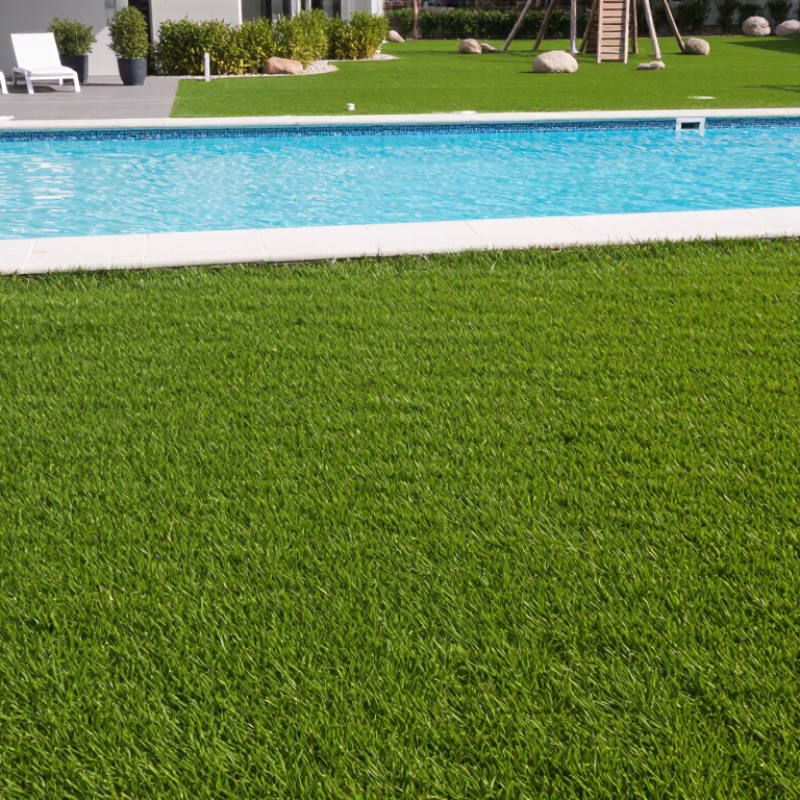
Choosing reliable Artificial Grasses suppliers requires more than comparing catalog prices. Global buyers must examine product quality, manufacturing experience, export capability, and long-term service. A realistic evaluation considers fiber shape, pile height, backing strength, drainage performance, UV resistance, and material safety. These details matter when grass is installed beside a sunny pool, across a busy rooftop, or on a child-friendly landscape.

This guide introduces ten Artificial Grasses suppliers serving international markets. It focuses on practical evidence, including product samples, technical datasheets, factory communication, certifications, production capacity, minimum order quantities, and delivery records. Buyers should also review warranty terms carefully. A low quotation may hide higher shipping costs, inconsistent color batches, or limited after-sales support.

No supplier is perfect.

Some companies excel at custom designs but struggle with small orders. Others offer competitive prices yet provide less transparent testing information. These weaknesses deserve attention. Supplier selection should match the project’s climate, installation method, budget, and expected foot traffic. Where possible, request samples and compare them under direct sunlight, water flow, and repeated use. Independent inspection can add confidence before shipment.

The following overview is designed for distributors, contractors, retailers, and commercial buyers seeking dependable sourcing options. It does not replace technical verification or local installation advice. Instead, it offers a structured starting point for informed decisions, helping buyers ask better questions and avoid assumptions that could become expensive later.
Top 10 Artificial Grasses Suppliers for Global Buyers

What Artificial Grass Suppliers Provide for Global Buyers

Top 10 Artificial Grasses Suppliers for Global Buyers

Artificial grass suppliers provide more than rolls of synthetic turf. Reliable suppliers offer landscape, sports, balcony, playground, and commercial solutions. They usually explain pile height, density, backing layers, drainage performance, and fiber resilience. Buyers can request samples before placing larger orders. A small sample reveals texture, color variation, and shine under direct sunlight. This practical step prevents expensive surprises. Still, product descriptions are not always complete. Ask for test reports, production photos, and clear warranty terms.

Tips: Compare samples on concrete and soil. Check drainage after heavy watering. Confirm roll width, loading methods, and replacement policies. Ask whether installation tools and manuals are available. These details affect labor costs and project timing.

For global buyers, professional suppliers also support customization and export preparation. They may adjust colors, dimensions, packaging, and labeling for different projects. Strong suppliers provide technical data, safety information, invoices, and shipping documents. Some coordinate container loading to reduce wasted space. Others recommend installers or explain seam tape, adhesive, and edge fixing methods. However, communication can still fail across languages and time zones. Confirm every specification in writing, including tolerance levels and delivery dates. A supplier may sound experienced, yet delayed replies can become a serious project risk. Inspecting pre-shipment photos helps, but it does not replace independent quality checks.

How to Evaluate Artificial Grass Quality and Product Standards

When comparing the Top 10 Artificial Grasses Suppliers for Global Buyers, quality should begin with measurable performance, not surface appearance. A dense, bright sample may still flatten quickly under heavy foot traffic. According to Grand View Research’s 2024 artificial turf market analysis, the global market continues to expand, increasing the need for consistent testing and documentation. Buyers should request pile height, stitch rate, yarn thickness, backing structure, drainage capacity, and warranty conditions. These details reveal more than marketing photographs.

For sports applications, the FIFA Quality Programme Handbook examines ball roll, shock absorption, vertical deformation, and rotational resistance. ASTM F1292 evaluates impact attenuation, while EN 15330-1 addresses synthetic sports surfaces in Europe. Ask suppliers for recent laboratory reports, production-batch traceability, UV-resistance results, and drainage test figures. ISO 9001 certification can support process reliability, but it does not prove that every grass product performs equally. A certificate is evidence, not a guarantee. In practical inspections, I would also bend the backing, pull several tufts, and check whether loose fibers appear. A neat sample can still mislead.

Tips: Compare identical test methods and units. Request samples from the current batch. Check color consistency in sunlight. Test drainage after dust exposure, because clean laboratory water is unrealistic. Leave room for doubt; supplier documents may be accurate but incomplete.

Key Factors in Comparing International Grass Manufacturers

Comparing international artificial grass manufacturers requires more than checking catalog photos and unit prices. Begin with the product’s intended use: residential gardens, sports fields, balconies, or commercial landscapes. Fiber shape, pile height, density, backing strength, and drainage design should match local weather and foot traffic. A dense lawn may look attractive, but it can retain heat in exposed areas.

Request physical samples from several suppliers. Examine color under daylight, stitch spacing, backing flexibility, and recovery after compression. Ask for independent test reports covering UV resistance, tensile strength, water permeability, and fire performance where required. Reliable manufacturers explain testing methods clearly. Vague certificates deserve caution. Factory audits, production records, and quality-control photographs can also reveal whether the supplier operates consistently or only presents a polished showroom.

Price comparisons should include packaging, shipping, import duties, installation guidance, replacement policy, and warranty conditions. A lower quotation may hide thinner backing or shorter fiber durability. Sometimes, sample quality differs from mass production. That risk is easy to overlook. Discuss acceptable tolerances in writing, including color variation, roll length, and defect handling. Response speed matters too. During a project, unanswered technical questions can delay installers and increase storage costs. Suppliers with experienced export teams usually provide clearer documents, realistic lead times, and practical advice for regional climate conditions. Still, no manufacturer is perfect; verify claims independently before committing.

Top 10 Artificial Grasses Suppliers for Global Buyers - Key Factors in Comparing International Grass Manufacturers
Rank Anonymous Supplier Profile Primary Export Region Typical Product Focus Pile Height Yarn Structure Common Backing Options Typical Face Weight UV-Resistance Claim Drainage Design Common Compliance Documents Typical MOQ Estimated Production Lead Time Indicative Export Price Range Buyer Evaluation Score
1 Supplier Profile 01
Large-scale international manufacturer
East Asia Landscape Sports Commercial 20–50 mm PE monofilament with PP thatch yarn PP woven backing with latex coating 1,000–2,400 g/m² Typically 3–8 years, depending on formulation and climate Perforated backing; approximately 60–120 L/min/m² in commonly specified systems REACH, RoHS, ISO 9001; laboratory UV or colorfastness reports may be available 500–1,000 m² 25–45 days US$4.50–12.00/m² ★★★★★
2 Supplier Profile 02
High-volume private-label producer
East Asia Residential Retail Pet Areas 25–45 mm PE curled yarn and straight monofilament blend Two-layer PP backing; optional SBR latex 900–2,000 g/m² Typically 3–6 years under normal outdoor exposure Perforated primary backing; drainage depends on hole spacing and sub-base preparation REACH, RoHS, ISO 9001, product safety declarations 300–800 m² 20–40 days US$4.00–10.00/m² ★★★★☆
3 Supplier Profile 03
Sports-oriented technical manufacturer
Western Europe Football Multi-Sport Training Fields 40–65 mm PE monofilament or fibrillated tape yarn Coated woven backing with reinforced seams 1,400–2,800 g/m² Usually supported by project-specific laboratory testing Perforated backing; engineered systems may include shock pads and engineered sub-bases ISO 9001, EN 15330-1 test reports, FIFA or equivalent sports testing where applicable 1,000–3,000 m² 35–60 days US$8.00–20.00/m² ★★★★★
4 Supplier Profile 04
Mid-market landscape specialist
Southern Europe Gardens Hotels Roof Terraces 30–50 mm PE monofilament with matte and textured fibers PP backing with latex or polyurethane coating 1,100–2,200 g/m² Typically 4–8 years, subject to local solar exposure Perforated backing with optional drainage mat systems REACH, ISO 9001, fire-rating documentation for selected products 500–1,500 m² 30–50 days US$6.00–14.00/m² ★★★★☆
5 Supplier Profile 05
Cost-focused export manufacturer
South Asia Budget Landscape Events Temporary Installations 10–35 mm PE or PP straight yarn Single or double PP backing 500–1,500 g/m² Typically 2–5 years, depending on UV package and installation conditions Perforated backing; verify measured drainage rate before purchase REACH or RoHS declarations may be available; request independent test reports 300–1,000 m² 20–45 days US$2.80–7.50/m² ★★★☆☆
6 Supplier Profile 06
Premium residential turf manufacturer
North America Residential Lawns Pet Turf Putting Greens 30–45 mm PE monofilament with specialized infill-compatible yarn Multi-layer backing with reinforced coating 1,200–2,400 g/m² Commonly marketed with 8–15-year limited product warranties Perforated backing; pet systems may include odor-control infill and enhanced drainage layers ASTM test data, ISO documentation, lead and heavy-metal declarations where required 500–1,500 m² 30–55 days US$7.00–18.00/m² ★★★★☆
7 Supplier Profile 07
Integrated yarn and turf producer
East Asia Landscape Sports Municipal Projects 25–60 mm In-house PE monofilament and fibrillated yarn PP woven backing with latex coating 1,000–2,700 g/m² Typically 5–10 years in published technical specifications Perforated backing; drainage performance should be confirmed with product-specific test data ISO 9001, REACH, RoHS, EN 15330-1 reports for selected sports products 500–2,000 m² 25–50 days US$4.50–13.50/m² ★★★★☆
8 Supplier Profile 08
Custom design and OEM supplier
Middle East and East Asia Custom Colors OEM Projects Hospitality 20–50 mm PE monofilament, curly yarn, or mixed-color yarn PP backing; optional reinforced or fire-retardant constructions 800–2,300 g/m² Usually 3–8 years, depending on the specified UV stabilizer Perforated backing; custom drainage layouts may be available REACH, RoHS, ISO 9001, fire-test reports for specific constructions 500–1,000 m² 30–60 days US$5.00–15.00/m² ★★★★☆
9 Supplier Profile 09
Regional distributor with contract manufacturing
Oceania and Southeast Asia Residential Landscaping Renovation 25–45 mm PE monofilament and textured yarn blends Standard PP backing with latex coating 900–2,000 g/m² Typically 3–7 years; warranty terms vary by installation and climate Perforated backing; local installation standards may determine overall drainage performance Product technical sheets, REACH or RoHS declarations, selected laboratory reports 200–800 m² 15–40 days when stock is available; 30–55 days for production US$5.50–13.00/m² ★★★☆☆
10 Supplier Profile 10
Specialty producer for high-temperature markets
Middle East and East Asia Hot Climates Resorts Public Spaces 30–55 mm UV-stabilized PE monofilament with heat-management options Perforated PP backing with reinforced coating 1,000–2,500 g/m² Typically 4–8 years; confirm accelerated-weathering test conditions Perforated backing; cooling infill and permeable sub-base may be specified for hot environments REACH, RoHS, ISO 9001, UV-aging and flammability reports where applicable 500–1,500 m² 30–55 days US$5.00–15.00/m² ★★★☆☆
Buyer note: The figures shown are practical international-market benchmark ranges for anonymous supplier profiles, not company-specific claims. Actual pricing, warranty duration, drainage rate, UV performance, certifications, MOQ, and lead time should be verified through current technical data sheets, independent test reports, samples, and a written quotation.

Shipping, Pricing, and Import Considerations for Buyers

Top 10 Artificial Grasses Suppliers for Global Buyers

When comparing ten artificial grass suppliers, begin with product specifications, not catalog photos. Request samples showing pile height, yarn shape, backing, drainage holes, and UV test results.

A reliable supplier should explain production capacity, quality controls, and replacement procedures clearly. Ask for recent inspection records.

Small details matter.

Pricing often ranges from about $1.80 to $6.50 per square meter on an ex-works basis.

The final cost may increase after packaging, inland transport, ocean freight, insurance, duties, and local taxes. Request a written quotation under the same Incoterm.

Otherwise, comparisons become misleading. Roll dimensions also affect container loading and freight efficiency.

A low unit price can hide expensive empty space.

For shipping, confirm roll weight, carton measurements, loading quantity, and estimated transit time. Ask whether the supplier can provide commercial invoices, packing lists, certificates of origin, and accurate customs classification details.

Import rules differ by destination, so buyers should verify duty rates and labeling requirements with a licensed customs adviser. This is practical, not optional.

Before placing a large order, test one shipment in real weather and installation conditions. I have seen attractive samples fail after poor drainage or intense sunlight.

Supplier claims need independent checking.

Even experienced buyers sometimes underestimate warehouse space and unloading labor.

Top Supplier Profiles and Their Global Market Strengths

Top 10 Artificial Grasses Suppliers for Global Buyers

The strongest supplier profiles serve different global buying needs. One focuses on residential lawns, while another specializes in sports fields and playground surfaces. A landscaping supplier may offer natural-looking blades, soft textures, and small trial orders. A commercial producer often provides wider rolls, stable backing, and consistent batch colors. Export-focused suppliers usually support pallet planning, port documentation, and multilingual communication. Some suppliers also develop pet-friendly systems with drainage layers and odor-resistant treatment.

Look for suppliers with measurable production experience. Check blade height, density, yarn resilience, UV resistance, and backing strength. Ask for physical samples, not only digital photos. A reliable supplier should explain testing methods and provide clear product specifications. Global strength also depends on response speed, lead-time accuracy, and after-sales support. No supplier is perfect. Even a capable factory may struggle with unusual climate conditions or sudden order changes. That deserves careful review.

Tips: Compare at least three samples under direct sunlight. Bend the blades by hand. Inspect the backing for gaps. Request a small trial shipment before placing a large order. Confirm carton dimensions and container loading details early. Installation guidance matters too, especially for drainage, seams, and heavy foot traffic. I would also record every promise in writing. Friendly conversations can still create expensive misunderstandings.