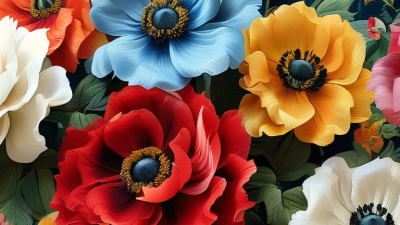
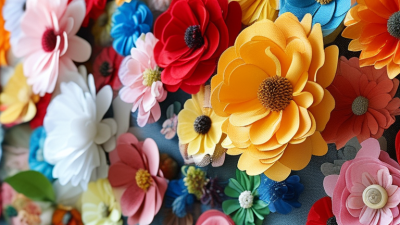
Wholesale buyers often face a crowded market filled with roses, peonies, daisies, orchids, and unfamiliar hybrid designs. Choosing the right Fabric Flowers requires more than attractive photographs. Buyers must examine petal edges, stitching, color consistency, stem strength, and packaging quality. Small defects become expensive when an order contains hundreds of pieces.
Lia Griffith, a respected craft designer and educator, says, “Handmade has a soul.” That idea matters in wholesale purchasing. A well-shaped fabric rose can make a wedding bouquet feel soft and natural. A tightly stitched sunflower can improve a retail display without frequent replacement. Materials also influence customer perception. Cotton feels approachable, velvet appears richer, and polyester often offers better color stability.
This guide evaluates ten practical Fabric Flowers for wholesale buyers. It considers visual appeal, production consistency, durability, customization, and likely retail demand. The list is not absolute. Regional tastes, seasonal campaigns, and customer budgets can change the best choice. That uncertainty deserves attention.
Quality is rarely perfect.
Buyers should request samples before committing to large quantities. Compare several pieces under natural light. Check whether petals flatten during shipping. Review supplier communication, lead times, and replacement policies. These details may seem ordinary, yet they often decide whether a collection succeeds.
The strongest wholesale selection balances beauty with dependable performance. A flower may look impressive online but disappoint in person. Careful testing remains essential. Sometimes, the simplest design sells best.
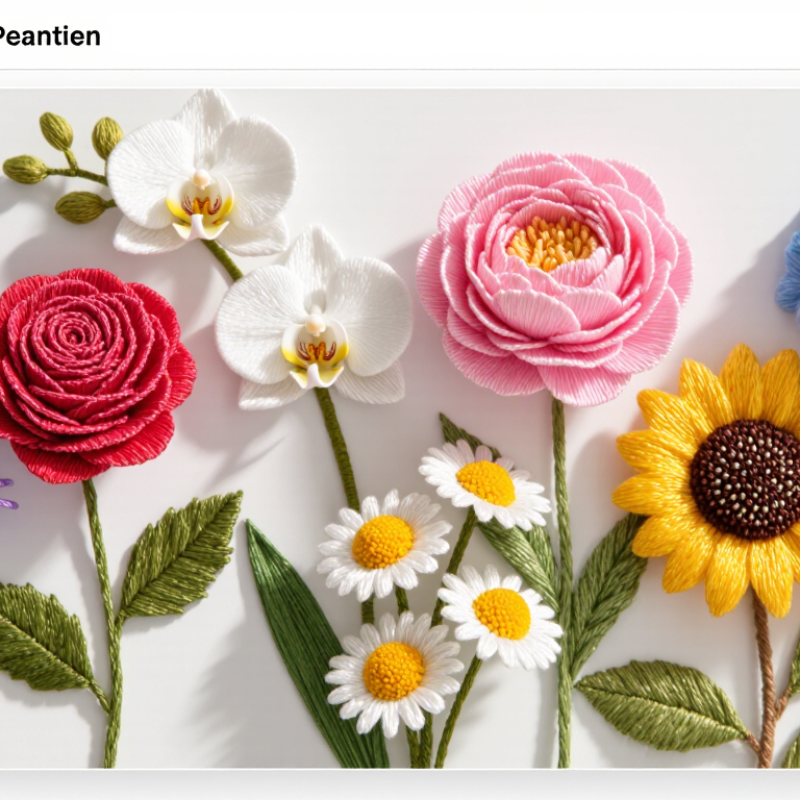
10 Best Fabric Flowers for Wholesale Buyers?
Fabric flowers are not interchangeable decorations. Their fiber, structure, and end use affect cost, durability, and customer satisfaction. Textile Exchange’s Materials Market Report 2024 records 124 million tonnes of global fiber production in 2023. It projects roughly 160 million tonnes by 2030. That pressure makes responsible material selection increasingly relevant.
For wholesale sampling, compare ten practical types: silk flowers for luxury accessories; cotton flowers for soft apparel trims; linen flowers for rustic home décor; polyester flowers for economical event styling; nylon flowers for lightweight hair accessories; felt flowers for children’s crafts; organza flowers for translucent bridal details; velvet flowers for rich winter displays; lace flowers for romantic garments; and nonwoven flowers for fast, uniform production. Each structure behaves differently. Organza holds crisp petals, while velvet absorbs light and feels heavier. Polyester usually tolerates repeated handling better than delicate silk, but appearance can feel less natural.
Inspect petal edges, stitching, colorfastness, and attachment points before placing bulk orders. A 2024 industry material report may support recycled-fiber discussions, but recycled content alone does not prove better performance. Ask for composition records and test samples. One common buying mistake is judging flowers under showroom lighting only. Daylight can reveal uneven dyeing and visible adhesive marks. I would also measure crushed recovery after packing, because attractive samples can arrive flattened. The “best” flower is often the one matching the end use, not the most expensive fiber.
| No. | Fabric Flower Type | Typical Fiber | Basic Structure | Wholesale Strengths | Key Buying Considerations | Best End Uses | Recommended Buyer Priority |
|---|---|---|---|---|---|---|---|
| 1 | Satin Fabric Flowers | Usually polyester satin; silk satin is available but less common for volume craft supply. | Smooth, tightly woven surface with a glossy face and soft drape. | Bright color appearance, consistent availability, good shape when layered or gathered, and broad retail appeal. | Check fraying at cut edges, gloss consistency, petal layering, and colorfastness before large orders. | Hair accessories, garment decoration, gift packaging, bridal details, corsages, and costume design. | Very High |
| 2 | Organza Flowers | Most commonly polyester; silk organza is lighter and more premium. | Sheer, crisp, lightweight plain weave with a translucent appearance. | Creates airy volume, holds sculpted petals well, and works effectively in layered designs. | Inspect edge sealing, stiffness, transparency, and whether the petals retain their shape during packing. | Wedding accessories, event décor, favor packaging, table styling, headbands, and decorative bouquets. | Very High |
| 3 | Chiffon Flowers | Commonly polyester; silk chiffon offers a softer, higher-cost alternative. | Lightweight, semi-sheer plain weave with fluid movement and soft drape. | Produces romantic, soft-edged flowers and is suitable for fashion-focused assortments. | Edges can fray; evaluate rolled or heat-finished edges, color variation, and resistance to snagging. | Apparel accents, scarves, bridal wear, hair clips, soft décor, and stage or dance costumes. | High |
| 4 | Velvet Flowers | Typically polyester velvet; cotton or rayon blends may have a different hand and sheen. | Dense pile surface over a woven or knitted base, giving a plush texture. | Rich tactile appearance, strong color depth, and premium visual impact in small formats. | Check pile direction, crushed areas, shedding, bulk in packaging, and consistency of petal edges. | Winter accessories, luxury packaging, handbags, apparel trims, holiday décor, and theatrical costumes. | High |
| 5 | Cotton Flowers | Cotton woven fabric, cotton lawn, muslin, canvas, or printed cotton blends. | Matte, breathable, absorbent, and available in structures ranging from lightweight to firm. | Natural hand feel, easy printing, wide craft acceptance, and good compatibility with sewing and glue. | Account for possible shrinkage, raw-edge fraying, print alignment, and differences in fabric weight. | Quilting, craft kits, children’s accessories, home décor, apparel, brooches, and handmade product lines. | High |
| 6 | Linen Flowers | Flax linen or linen blends, often combined with cotton or viscose for handling and cost control. | Matte, naturally textured woven structure with moderate body and visible slubs in some qualities. | Natural appearance, breathable fiber identity, and strong appeal for rustic or minimalist assortments. | Check blend ratio, stiffness, crease behavior, fraying, and shade variation caused by natural fiber character. | Boutique apparel, sustainable-themed crafts, home décor, wedding styling, napkin rings, and gift wrapping. | High |
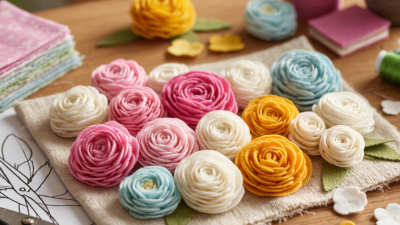
| 7 | Felt Flowers | Wool felt, rayon-viscose felt, polyester felt, or blended craft felt. | Nonwoven, compact, and stable; thickness depends on fiber and manufacturing method. | Clean die-cut shapes, minimal edge fraying, easy stacking, and efficient use in craft kits. | Confirm thickness, fiber content, color rub resistance, odor, and whether the material pills during handling. | Children’s crafts, seasonal décor, classroom kits, brooches, garlands, hair accessories, and appliqué work. | High |
| 8 | Burlap or Jute Flowers | Jute, burlap made from jute or other bast fibers, and jute-cotton blends. | Open, coarse plain weave with a firm, rustic texture and visible yarn structure. | Distinctive natural look, strong visual texture, and good fit for rustic and country-style themes. | Check odor, loose fibers, shedding, weave uniformity, moisture exposure, and edge stability. | Rustic weddings, farmhouse décor, wreaths, gift packaging, seasonal displays, and craft projects. | Medium |
| 9 | Rayon or Viscose Flowers | Regenerated cellulose fibers such as viscose or rayon; fiber names depend on regional labeling practice. | Soft, smooth, and drapable, with a fluid hand that can mimic a natural textile feel. | Soft touch, elegant movement, and suitability for premium-looking fashion accessories. | Check wet strength, colorfastness, dimensional stability, and the amount of synthetic reinforcement. | Fashion accessories, scarves, apparel embellishment, boutique décor, and soft bridal details. | Medium |
| 10 | Nylon Mesh Flowers | Nylon net, tulle, or other synthetic mesh constructions. | Lightweight open structure with spring, transparency, and moderate shape retention. | Low bulk, vivid color options, quick-drying synthetic performance, and strong volume for layered designs. | Evaluate mesh hole size, snag resistance, heat sensitivity, edge finish, and compression recovery. | Dancewear, costumes, party décor, tutus, hair accessories, lightweight bouquets, and craft kits. | High |