Best Fake Spring Flowers Manufacturer in China?

Choosing the best Fake Spring Flowers manufacturer in China takes more than comparing catalog photos and unit prices. Buyers should examine product consistency, material options, customization, production capacity, and communication before placing an order. Small details matter: petal edges, color variation between batches, wire strength, and how securely each stem sits in a bouquet. They show how carefully a supplier manages everyday production.

Ask for current product photos, clear specifications, sample availability, and realistic production timelines. Confirm what materials and finishes are used, and request relevant quality documents when they apply. A polished website alone is not proof of manufacturing capability. Direct questions, specific answers, and consistent follow-up offer more useful evidence. Samples help, too. Compare them under natural light and check whether leaves, stems, and blossoms match the approved design.

This guide explores how to assess Chinese suppliers of artificial spring blooms, from product range and customization to quality checks and shipping communication. It does not assume one factory suits every buyer. A retailer ordering compact tulip bundles may need different packaging and quantities than a wholesaler sourcing mixed seasonal arrangements. Even a good supplier can have weak spots, such as limited color choices or slower sample revisions. That deserves attention, not an excuse. Use the comparison points that follow to build a shortlist, verify claims, and decide which manufacturer fits your product needs, budget, and timeline.
Best Fake Spring Flowers Manufacturer in China?

What Are Fake Spring Flowers and How Are They Used?

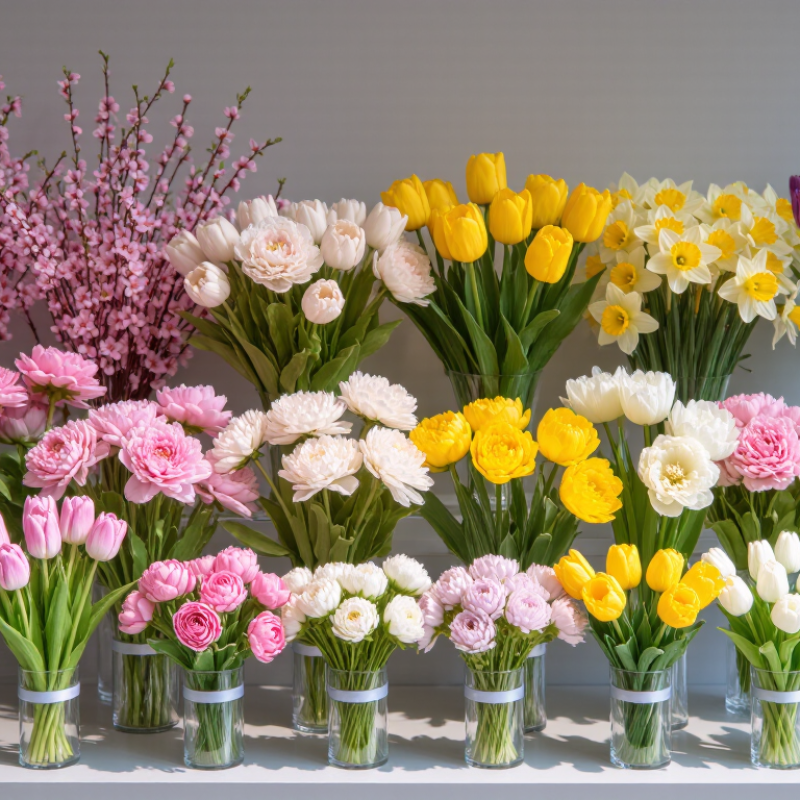
Fake spring flowers are artificial blooms designed to suggest the season’s fresh growth. They are commonly made from polyester, molded plastic, or fabric petals, with flexible wire stems for shaping. Some have layered green leaves and lightly shaded centers; these details can make a display feel less flat. Not real, but useful.

They appear in home vases, shop windows, wedding tables, and seasonal displays where fresh flowers may wilt or need frequent replacement. A small bunch of tulips can brighten a narrow hallway; cherry blossom branches suit a taller entry vase. For a natural look, vary stem heights and leave space between blooms. Too many can look stiff.

When choosing them, check petal edges, color transitions, stem strength, and whether leaves detach easily. View samples near a window, where strong light can reveal shiny surfaces or uneven coloring. Dust them with a soft cloth, and keep them away from heat that may warp plastic parts. Quality varies. Some look convincing up close, while others feel too uniform. That limitation matters in intimate settings. Still, reusable stems can be practical for anyone who wants spring color without weekly replacements.

Which Materials and Production Methods Do Chinese Manufacturers Use?

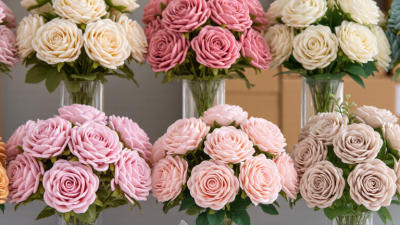
Chinese artificial-flower manufacturers use polyester fabric, PE, and PVC to create different petal shapes and price levels. Polyester can be cut, dyed, and heat-shaped into soft petals with visible color variation. PE is often molded into leaves or sturdy flower parts, while PVC can make flexible details. Wire inside stems helps branches bend and hold an arrangement. Materials vary by factory and product.

Production often combines machine work with hand assembly. Molds form plastic parts; fabric petals are cut, shaped, and attached in layers. Workers may wrap stems with paper or plastic tape, then adjust leaves and blooms by hand. Small changes matter. A slightly uneven petal edge can make a flower look less artificial, but inconsistent assembly can also create mismatched pieces.

Ask how a maker checks color consistency, stem strength, and odor before packing. A practical sample review should include touching the petals, bending the stems, and comparing several pieces under daylight. These checks do not replace factory inspections, and sample quality may differ from bulk production. That gap deserves attention. Even careful workshops can have limits in dye matching or hand-finishing, so clear specifications and repeat checks are useful.

What Quality Standards Apply to Artificial Spring Flowers?

Artificial spring flowers should be assessed for appearance, construction, and consistency—not just a bright showroom sample. Petals should hold their shape without sharp creases, while color should remain even across the bloom and leaves. Check the edges. Loose threads, visible glue, and rough cuts can make a flower look tired up close. Gently bend the stems and leaves; internal wire should support shaping without poking through the covering. A mild material smell may fade, but strong or persistent odors deserve investigation.

Reliable checks also include color transfer, shedding, and repeated handling. Rub a damp white cloth lightly over a petal to spot unstable dye, then shake the stem over a clean surface to reveal loose fibers. Small details matter. For bulk orders, compare samples from different cartons, since one carefully finished piece may not represent the whole shipment. Ask suppliers for written inspection criteria, material details, and test records relevant to the intended market. Requirements can differ by destination and use, so avoid assuming one certificate covers every concern. Even a tidy sample can mislead; agree on acceptable variation in petal color, dimensions, and finish before production begins.

How to Compare Manufacturers by Design, Capacity, and Pricing

Best Fake Spring Flowers Manufacturer in China?
How to Compare Manufacturers by Design, Capacity, and Pricing

When comparing artificial spring flower manufacturers, start with the details you can inspect. Ask for close-up photos of petal edges, stem joints, and color transitions. Request samples in the exact shades and sizes you plan to order. Small details matter. A catalog alone cannot show how flowers look under natural light or feel when handled. One easy mistake is choosing a design from photos without checking a physical sample.

Compare production capacity with your order schedule, not just a stated monthly output. Ask how the factory handles peak-season orders, sample approval, and replacement pieces. Then compare quotes line by line: flower size, materials, packaging, and shipping terms can change the final cost. A very low price may mean thinner fabric or less detailed shaping. Prices can shift. Get specifications in writing, and leave time for one sample revision; plans sometimes need adjusting.

Tips: Send the same product brief to each manufacturer. Include reference colors, stem length, quantity, and delivery date. This makes quotes easier to compare and helps reveal differences before production begins.

Best Fake Spring Flowers Manufacturer in China? — How to Compare Manufacturers by Design, Capacity, and Pricing

Comparison guide: The supplier profiles and figures below are illustrative screening benchmarks, not verified quotations or claims about specific factories. Actual capability, minimum order quantity, lead time, and price depend on the product specification and must be confirmed directly with each manufacturer.

Comparison Dimension Value-Focused Production Profile Mid-Range Custom Production Profile Premium Design-Led Production Profile What to Verify Before Ordering
Typical spring-flower products Basic tulip, daffodil, cherry-blossom, and mixed-flower stems Seasonal assortments with varied colors, foliage, and stem styles Detailed botanical replicas, coordinated collections, and bespoke designs Request a current catalogue and confirm which designs are produced in-house.
Design and materials Standard shapes and colors; commonly uses polyester fabric, PE, or PVC components More color choices, layered petals, and mixed materials; custom colors may be available More refined petal shaping, color gradation, and construction details; material options vary by design Ask for material specifications, close-up photographs, physical samples, and color approval before production.
Customization Usually focused on existing designs, colors, and packaging options May support custom colors, stem lengths, bunch counts, and packaging May support new designs, custom molds, coordinated ranges, and branded packaging Confirm tooling or development charges, sample fees, ownership of artwork, and approval stages.
Indicative MOQ for a standard design Often screened at approximately 300–1,000 pieces per style Often screened at approximately 500–2,000 pieces per style May be higher for custom development; confirm the quantity separately for each design Clarify whether MOQ is per style, color, size, or total order, and whether mixed cartons are allowed.
Indicative sample and production timing Existing samples may be available; production commonly requires several weeks after approval Custom samples and production may require additional development time New designs or tooling can extend sample development and production schedules Request a dated sample plan and production schedule, including peak-season capacity and shipping readiness.
Indicative production capacity Best assessed by confirming the line capacity allocated to the requested SKU and order window Confirm capacity for each color or style when ordering a mixed assortment Hand-finished details may affect output; verify the production plan for the exact specification Ask for a capacity statement, production plan, and evidence that the quoted output can meet your deadline.
Indicative FOB price per stem Planning range: approximately US$0.25–US$0.80 for simpler designs Planning range: approximately US$0.80–US$2.50 for more detailed or customized designs Planning range: approximately US$2.50–US$6.00 or more for complex, premium designs These broad planning ranges are not market averages or offers. Compare like-for-like quotations with identical size, materials, packaging, quantity, and Incoterms.
Main price drivers Stem length, basic material choice, order quantity, and packing method Petal detail, number of components, color customization, and bunch configuration Design complexity, labor-intensive finishing, special materials, tooling, and quality requirements Request a quotation breakdown for product, packaging, samples or tooling, and freight separately.
Quality-control checks Check color consistency, stem attachment, visible glue, and transit damage Also check flower dimensions, bunch count, finish consistency, and carton packing Agree on approved samples, defect tolerances, inspection criteria, and any required compliance documents Set written acceptance criteria and arrange pre-shipment inspection when order value or risk warrants it.
Best fit for Buyers prioritizing simple designs, existing styles, and cost control Buyers needing a balance of customization, assortment options, and unit cost Buyers prioritizing distinctive design, detailed finishing, and product differentiation Choose based on the approved sample and total landed cost, not the quoted unit price alone.

How to Assess a Chinese Manufacturer’s Customization and Export Services

A capable Chinese artificial spring flower manufacturer should turn a design brief into measurable specifications. Ask for petal material, stem length, color references, bunch count, and packaging dimensions in writing. Request a pre-production sample beside your approved color swatch. Check whether leaves detach easily and stems hold their shape after bending. Small details matter. A sample can look convincing, yet bulk production may vary. Ask for inspection records, acceptable color tolerances, and a clear process for handling defects.

Customization is more than changing flower colors. Confirm whether the factory can adjust stem length, bouquet composition, label placement, and carton packing, then request a cost and lead-time breakdown for each change. UNCTAD’s Review of Maritime Transport 2024 reported that containerized trade grew only 0.3% in 2023. That figure is a reminder to assess export planning, not just factory pricing. Ask how the supplier books shipments, shares tracking updates, and responds to delays. Verify that invoices, packing lists, and destination-specific documents match the order details.

Check proof, not promises. Compare the sample approval, production photos, inspection results, and final carton count. Ask for carton dimensions and gross weight before booking freight; a bulky arrangement can raise shipping costs even when each stem is light. Request a written schedule with sample, production, and dispatch dates. One weakness remains: photos cannot fully show color consistency under different lighting, so inspect a physical sample whenever possible.