China Top Faux Flowers Suppliers for Global Buyers

Choosing reliable Faux Flowers suppliers in China requires more than comparing catalog photos and unit prices. Global buyers must examine material quality, production control, customization ability, packaging, and export experience. A realistic sourcing process begins with clear product specifications, including flower size, stem length, fabric type, color tolerance, and intended use.

This guide to China Top Faux Flowers Suppliers for Global Buyers focuses on practical details that affect commercial results. Experienced buyers often request samples before discussing large orders. They inspect petal edges, wire strength, color consistency, odor, dust resistance, and carton protection. Supplier audits, factory videos, product certifications, and independent quality inspections can add useful evidence. Still, documents alone cannot prove every production capability.

No supplier is perfect.

A beautiful sample may not represent every batch. Therefore, buyers should confirm inspection standards, acceptable defect rates, lead times, minimum order quantities, and replacement policies in writing. Reliable suppliers usually communicate clearly when materials, seasonal capacity, or shipping schedules change. They should also explain whether products meet the buyer’s destination-market requirements.

Sustainability deserves careful attention. Terms such as recyclable, eco-friendly, or biodegradable need supporting details about materials and packaging. Buyers should ask precise questions rather than accept broad marketing claims. The strongest supplier relationship develops through transparent communication, documented approvals, and repeated quality checks. This article highlights promising Chinese manufacturers and sourcing considerations, while recognizing that price, craftsmanship, and service may vary by project. Some recommendations may need further verification. That is part of responsible purchasing.
China Top Faux Flowers Suppliers for Global Buyers

What Are Faux Flowers and Why Do Global Buyers Choose Them?

Faux flowers are decorative blooms made from materials such as polyester, polyethylene, PVC, or fabric. Modern designs can copy the soft curves of rose petals and the uneven colors of fresh leaves. Some stems even include flexible wire, allowing buyers to shape arrangements by hand. Unlike fresh flowers, they need no water, sunlight, or daily trimming. They stay consistent.

Global buyers choose faux flowers for practical reasons. Retailers can display the same collection for months without worrying about seasonal shortages. Hotels and event planners reduce replacement costs, especially in hot or dry climates. Online sellers also value lighter packaging and predictable inventory. A shipment of artificial peonies, eucalyptus, or baby’s breath can arrive ready for display after simple unpacking.

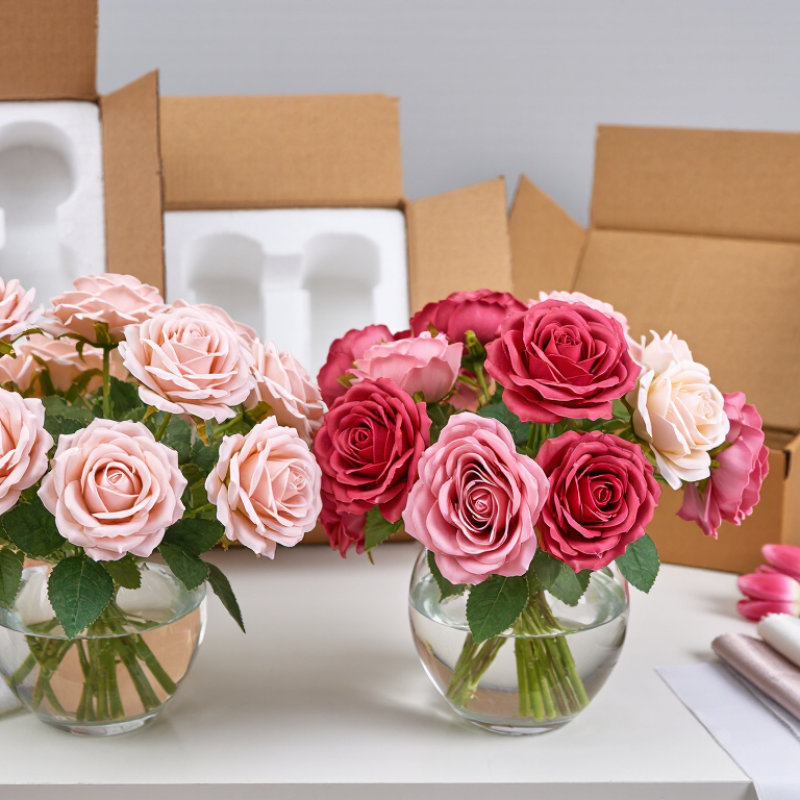
Reliable sourcing requires more than attractive photographs. Experienced buyers usually request samples and check petal edges, color variation, stem strength, odor, and surface dust. They also review carton protection before placing larger orders. Suppliers with clear specifications and stable quality are easier to trust. Still, faux flowers are not perfect. They can collect dust, fade near strong windows, and create more environmental concerns than natural flowers. That deserves honest consideration. For international projects, buyers should also confirm packaging standards and local safety requirements before production.
How to Identify Leading Faux Flower Suppliers in China

Identifying a leading faux flower supplier in China requires more than a polished website. I start by checking factory photos, production areas, and export experience. A reliable supplier should explain its materials clearly, including polyester, PE, wire, and dyeing methods. Ask for recent samples, not only catalog images. Small details matter. Inspect petal edges, stem strength, color consistency, and odor after unpacking. If the supplier avoids technical questions, I treat that as an early warning.

Factory verification adds confidence. Request a video tour or an independent audit report covering equipment, workers, storage, and quality procedures. Production capacity should match your order, especially before seasonal demand rises. Ask how defects are recorded and replaced. A serious supplier can provide inspection records, packaging specifications, and clear lead times. They should also confirm whether materials meet the destination market’s applicable safety requirements. Do not rely on a single conversation. Compare samples from at least three factories and record differences in a simple checklist.

Communication reveals practical expertise. Strong teams answer dimensions, carton loading, minimum order quantities, and customization limits without vague promises. They discuss moisture protection, crush-resistant cartons, and color approval before mass production. I have seen attractive samples fail because packed stems arrived bent. That mistake changed my process. Now I request a trial shipment and inspect random cartons before approving repeat orders. References from current export customers can support reliability, but they are not proof alone. Consistent samples and traceable quality checks matter more.

What Product and Customization Options Do Chinese Suppliers Offer?

Chinese faux flower suppliers offer a broad product range for global buyers. Common options include silk roses, PE lilies, velvet hydrangeas, artificial eucalyptus, dried-style stems, wreaths, garlands, and decorative bouquets. Buyers can request different stem lengths, petal shapes, leaf densities, and color tones. Some factories also produce arrangements for hotels, weddings, retail displays, and home decoration.

Customization usually begins with a reference image, physical sample, or color code. Suppliers may adjust flower size, fabric texture, wire strength, and bouquet fullness. They can also develop custom packaging, barcode labels, gift boxes, and protective cartons. For large orders, buyers should confirm material details, fire-safety requirements, packaging tests, and production tolerances in writing. Small samples matter.

Experienced sourcing teams often request a pre-production sample before approving bulk manufacturing. They may check color consistency under natural light, loose petals, bent stems, odor, and carton compression. A factory with clear inspection records is easier to evaluate. Still, a polished sample can hide production weaknesses. This is where buyers need patience. Ask for updated photos during production, not only after packing. I have found that color matching is sometimes imperfect, especially with mixed fabrics and handmade assembly. Allowing a reasonable tolerance can prevent disputes, while precise approval standards protect the final result.

China Top Faux Flowers Suppliers for Global Buyers - What Product and Customization Options Do Chinese Suppliers Offer?

Product Category Common Materials Typical Product and Customization Options Typical Commercial Terms Quality and Compliance Considerations Best-Suited Applications
Artificial Single Stems Polyester, silk-look fabric, plastic, latex-coated fabric, wire stems and paper-wrapped wire
  • Flower species, bloom size and stem length
  • Color matching based on physical samples or color references
  • Bud, bloom and foliage combinations
  • Stem finish, leaf density and petal texture
Commonly offered in bulk cartons; sample approval is normally completed before mass production. Minimum order quantities vary by design, material and customization level. Check color consistency, petal attachment, wire strength, odor, shedding and packaging protection. Florists, event decoration, home décor and retail flower sections
Artificial Bouquets Fabric flowers, molded plastic foliage, foam accents, wire stems and decorative wrapping
  • Mixed flower varieties and seasonal color palettes
  • Custom stem count, bouquet diameter and shape
  • Ribbon, paper, mesh or sleeve wrapping
  • Private-label hangtags and barcode labels
Standard designs are generally easier to source in smaller trial quantities than fully customized bouquets. Packing quantities depend on bouquet size and compression resistance. Confirm bouquet symmetry, stem stability, colorfastness and whether flowers recover their shape after transport. Gift shops, supermarkets, wedding décor and online retailers
Artificial Roses and Popular Flower Types Polyester, satin, velvet-touch fabric, PU-coated fabric, plastic and latex-like coatings
  • Rose, peony, hydrangea, tulip, sunflower, orchid and daisy styles
  • Open, semi-open and closed bloom stages
  • Natural-looking gradients, printed details and petal edging
  • Single stems, bunches, garlands or arrangements
Pricing is influenced by flower size, number of petals, hand-finishing and the proportion of molded versus handmade components. Compare reference samples for petal layering, surface texture, color gradient and visual realism. Everyday décor, hospitality interiors, weddings and seasonal merchandising
Artificial Foliage and Greenery PE, PVC, polyester fabric, wire, flocking materials and UV-resistant coatings
  • Eucalyptus, fern, ivy, palm, olive, monstera and grass styles
  • Leaf size, vein detail, color variation and density
  • Stem length, hanging length and branch structure
  • Indoor or outdoor-oriented surface treatment
Longer branches and dense foliage usually require larger cartons or protective inner packing. Outdoor specifications should be confirmed separately. Ask for UV test information when products will be used outdoors; inspect leaf attachment, coating uniformity and flexibility. Green walls, restaurants, offices, hotels and home interiors
Artificial Potted Plants Plastic or fabric foliage, cement-look or plastic pots, foam, stones, moss and decorative fillers
  • Plant variety, height and canopy fullness
  • Pot material, color, shape and surface finish
  • Decorative stones, artificial soil or moss
  • Custom pot labels, inserts and retail presentation
Freight cost is strongly affected by pot size, weight and carton volume. Nestable pot designs can help reduce shipping space. Check pot stability, base weight, foliage anchoring, surface scratches and resistance to deformation. Office décor, hospitality projects, garden centers and apartment styling
Artificial Flower Arrangements Fabric or plastic flowers, floral foam, ceramic or glass containers, baskets, wood and metal accessories
  • Container selection and arrangement architecture
  • Custom color themes for events or interior projects
  • Height, width, flower ratio and asymmetrical designs
  • Protective inserts and presentation-ready packaging
Project orders may require drawings, prototypes or physical samples before production. Lead times are usually longer for complex handmade arrangements. Inspect center-of-gravity stability, adhesive marks, container quality and the arrangement's ability to withstand handling. Interior design projects, hotels, restaurants, offices and events
Garlands, Wreaths and Hanging Décor Fabric flowers, plastic foliage, foam, wire frames, rattan-style frames and synthetic vines
  • Overall length, diameter and hanging method
  • Seasonal themes, foliage density and flower combinations
  • Flat-packed or pre-shaped construction
  • Custom hooks, ribbons, tags and display packaging
Packing method should be agreed in advance because compression can affect the final shape and recovery time. Test frame rigidity, hanging-point strength, colorfastness and shape recovery after unpacking. Weddings, festivals, retail displays, doors, windows and backdrops
Outdoor and UV-Resistant Artificial Flowers UV-treated PE, PVC, coated fabric, synthetic fibers, treated wire and weather-resistant fillers
  • UV treatment level and intended exposure conditions
  • Weather-resistant colors and construction methods
  • Balcony planters, outdoor arrangements and landscape accents
  • Drainage-compatible containers and anchoring solutions
Outdoor products should be quoted with clearly defined use conditions, test duration and packaging requirements. Request documented UV and weathering test results where required; laboratory performance can differ by material and climate. Patios, commercial entrances, balconies, outdoor events and landscape displays
Wedding and Event Flower Décor Fabric flowers, foam flowers, plastic foliage, acrylic accessories, wire, ribbons and textile backdrops
  • Theme-based color palettes and coordinated collections
  • Table centerpieces, arches, aisle markers and backdrops
  • Modular or reusable construction for repeated events
  • Protective cases, labeled components and assembly instructions
Event projects require accurate delivery schedules, component counts and packaging designed for repeated handling. Confirm color matching across product types, reusable fasteners, structural safety and replacement-part availability. Wedding planners, rental companies, venues and event decorators
Retail-Ready and Private-Label Programs Any standard faux-flower material combined with paperboard, corrugated cartons, plastic sleeves or fabric bags
  • Custom logos, labels, inserts and barcode stickers
  • Retail box, sleeve, hanger or window packaging
  • Product photography references and multilingual instructions
  • Assortment planning, color sets and carton marking
Packaging development, artwork approval and custom tooling may add development time and cost. Trial orders are recommended before a large rollout. Confirm packaging dimensions, drop protection, label accuracy, carton marks and destination-market requirements. E-commerce sellers, department stores, garden centers and home décor chains

Note: Minimum order quantities, prices, sample charges, production schedules and customization limits vary by product construction, order volume, packaging requirements and inspection standards. Buyers should confirm final specifications with the selected supplier before placing an order.

How to Evaluate Quality, Pricing, Certifications, and Production Capacity

China Top Faux Flowers Suppliers for Global Buyers

Quality begins with measurable details, not attractive showroom samples. Grand View Research estimated the global artificial flowers market at about USD 1.8 billion in 2023, with steady growth through 2030. This growth increases supplier choice, but also creates uneven quality. Check petal stitching, stem flexibility, color consistency, and odor after unpacking. Request samples from different production batches. A polished sample can still mislead. Confirm colorfastness through laboratory testing, especially for outdoor arrangements. Ask for material declarations and relevant REACH or RoHS test reports when chemical safety matters.

Pricing should include more than the factory quotation. Compare material cost, packaging, tooling, inspection, freight, and replacement allowances. Calculate landed cost per finished arrangement. Very low prices may indicate thinner fabric, weaker wire, or reduced inspection time. ISO’s 2023 Survey reported more than 1.2 million ISO 9001 certificates worldwide, yet certification alone does not guarantee product quality. Review the certificate scope, issuing body, expiry date, and corrective-action records. Consider independent pre-shipment inspection.

Capacity requires evidence. Ask for monthly output by product category, current utilization, peak-season lead times, and backup equipment. A supplier claiming 100,000 pieces monthly should show production records, staffing, and packaging space. Visit the facility when possible, or arrange a live video audit. Some evaluations remain imperfect. Forecasts change, and factory data may be selective. Use a scorecard, approve a pilot order, and measure defect rates before scaling.

How Global Buyers Evaluate Faux Flower Suppliers

This practical benchmark highlights the main factors buyers typically review when comparing faux flower suppliers: product quality, compliance, pricing, certifications, and production capacity. The percentages represent suggested evaluation weights rather than data from any individual company.

Quality consistency receives the highest weighting because color accuracy, material durability, realistic appearance, and finishing quality directly affect customer returns and repeat orders.

How to Manage Sampling, Orders, Shipping, and Supplier Communication

China Top Faux Flowers Suppliers for Global Buyers

Sampling should feel like a controlled experiment, not a casual photo exchange. Request color chips, stem lengths, flower diameters, material details, and packaging dimensions. Ask for three samples from the same production batch. Compare them under daylight and warm indoor light. Record every approved detail in a signed specification sheet. Include acceptable color, glue marks, leaf position, and carton damage limits. ISO 2859-1 can guide lot sampling, although small orders may require practical adjustments.

Orders need visible milestones. Confirm MOQ, unit price, tooling charges, production days, payment stages, and inspection timing. Use one shared order sheet. It should show SKU codes, quantities, carton measurements, and the latest revision. A supplier should send dated production photos, not only polished catalog images. One overlooked revision can create thousands of mismatched stems. It happens.

Shipping deserves early attention. UNCTAD’s Review of Maritime Transport reports that over 80% of global merchandise trade by volume moves by sea. Therefore, confirm carton compression, inner protection, moisture control, and loading photos before booking. Compare sea, rail, and air costs using actual carton volume. The World Bank’s 2023 Logistics Performance Index assessed 139 economies, highlighting customs, tracking, infrastructure, and timeliness. Ask suppliers for export documents, packing lists, commercial invoices, and agreed Incoterms. Keep communication factual and weekly. A short message stating “production delayed two days” is better than silence. Yet buyers should also review their own forecasts; rushed changes often cause avoidable errors.