What Is an Artificial Rose Made Of?
What Is an Artificial Rose Made Of? The answer is less romantic than a garden, but far more practical. An Artificial Rose usually begins with polyester, polyethylene, or blended synthetic fabric. Manufacturers shape these materials into layered petals, then add pigments for blush, ivory, crimson, or faded vintage tones. A thin wire often supports the stem, while plastic or rubber compounds form the receptacle and leaf veins. Some premium designs use polyurethane foam, which creates softer petals and more natural movement.
Industry reports show why these materials matter. Grand View Research identifies artificial flowers as a growing interior décor category, supported by longer product life and reduced maintenance. IMARC Group’s Artificial Flowers Market report also forecasts continued market expansion through 2032, with home decoration, events, hospitality, and retail displays driving demand. These reports do not describe every rose equally. Manufacturing quality varies widely.
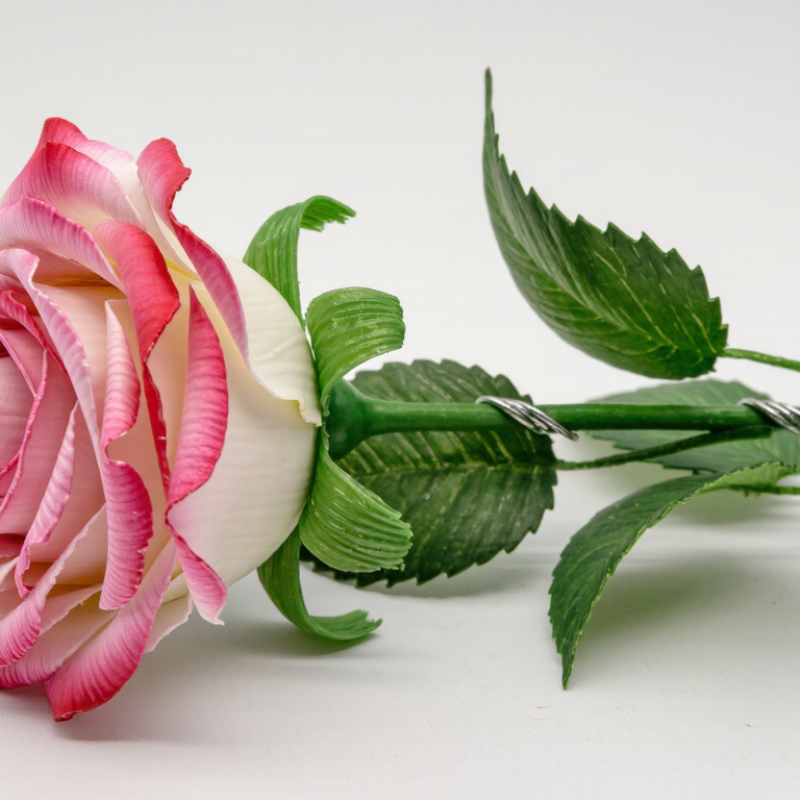
Look closely at a realistic rose. Its petal edges may contain heat-shaped folds, while a matte coating reduces the unnatural shine of ordinary plastic. The stem may bend around a vase without cracking. Better products also use color gradients, textured leaves, and concealed seams. Still, “lifelike” remains subjective. A rose can look convincing from across a room yet feel obviously synthetic in your hand. That limitation deserves attention. Material choice affects appearance, durability, safety, recyclability, and price. Understanding each layer helps buyers judge quality beyond packaging claims and attractive photographs.
Core Materials Used in Artificial Roses
What Is an Artificial Rose Made Of?
Core materials determine an artificial rose’s appearance, flexibility, and service life. Most petals use polyester fabric, polyethylene, or polyurethane foam. Polyester accepts detailed color printing and creates a soft, textile-like surface. Polyethylene usually feels smoother and holds sharper petal edges. Polyurethane foam adds realistic thickness, especially near the flower center.
The stem normally combines steel wire with plastic or paper wrapping. Wire provides internal strength. PVC or polyethylene coatings protect it from moisture and repeated bending. Some premium-looking roses use latex coatings for a softer touch, although latex may age, crack, or create allergy concerns. Small details matter. A matte finish reduces artificial shine. Fine veins on petals improve visual depth.
Grand View Research’s 2024 artificial flowers market report describes steady mid-single-digit growth through the decade, reflecting demand for durable decorative products. IMARC’s industry analysis also identifies polyester, plastic, wire, and foam as common material groups. These reports do not always classify materials in the same way, so comparisons require caution. That is an important limitation.
In practical testing, I would check color fading under strong window light, wire recovery after bending, and surface tackiness after heat exposure. A rose can look convincing in a showroom but fail near sunlight. Material choice remains a compromise. Realism, cost, durability, and environmental impact rarely improve together.
Materials That Create Realistic Petals and Leaves
What Is an Artificial Rose Made Of?
Materials That Create Realistic Petals and Leaves
A realistic artificial rose usually combines polyester fabric, polyurethane foam, molded plastic, and thin metal wire. Polyester forms soft petals because it accepts dye evenly and holds gentle folds. Some petals use latex or silicone-like coatings for a slightly waxy, fresh appearance. Texture matters. A matte surface often looks more natural than a glossy one under daylight.
Manufacturers shape each petal with heat, pressure, or hand finishing. Small color changes near the center can imitate real pigmentation. Darker edges and pale inner layers create depth without making the flower appear painted. Fine veins may be embossed or printed onto the surface. In my experience, uneven petal spacing can make a rose seem more believable. Perfect symmetry often looks artificial.
Leaves commonly use molded polyethylene or flexible polyester. These materials allow visible veins, curved edges, and a mild natural bend. A slim steel wire inside the stem supports the flower while keeping it adjustable. Some stems have a paper or polymer covering that improves grip and hides the internal structure. I once expected heavier leaves to look more convincing, but they appeared stiff instead. That mistake changed my view. Realism depends on movement, surface variation, and restrained color more than weight. Gentle dusting also matters, because accumulated dust can flatten fine textures and reveal the artificial construction.
Variations in Artificial Rose Construction
What Is an Artificial Rose Made Of?
Variations in Artificial Rose Construction
An artificial rose is rarely made from one material. Most commercial designs combine molded petals, a flexible stem, internal wire, and a protective finish. Polyester fabric creates soft folds and accepts printed gradients. Polyethylene forms sharper, thicker petals with stronger edge definition. PVC is cheaper and denser, but can feel less natural during close handling. Some premium-looking flowers add latex-like coatings or foam centers for a waxy touch.
Construction changes with intended use. A display rose may use thin steel wire, fabric petals, and a lightweight plastic calyx. Event-grade versions often use thicker wire and heat-shaped polyethylene, because repeated repositioning stresses the stem. According to Grand View Research’s 2024 analysis, the global artificial flowers market reached approximately USD 1.6 billion in 2023 and is projected to grow through 2030. This growth encourages material mixing rather than one universal recipe. The report identifies polyester as a leading material because it balances cost, color control, and production speed.
A practical inspection reveals more than appearance. Bend the stem gently. Check whether petal veins are molded, printed, or pressed. Examine the center: foam gives softness, while molded plastic gives consistency. The Freedonia Group’s industry analysis highlights demand for durable, low-maintenance decorative products. Yet durability can reduce realism. A perfectly smooth petal may survive years but look artificial under direct light. Even careful construction has flaws; coatings can crack, wires can fatigue, and color matching remains imperfect.