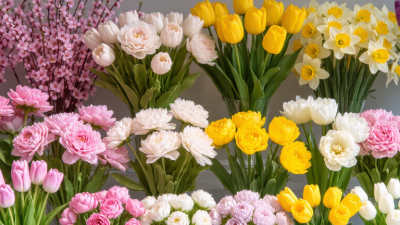
Sourcing Silk Flowers wholesale in 2026 takes more than comparing unit prices. Buyers need to judge realism, construction, consistency, and delivery reliability before placing a large order. A rose may look convincing in a product photo, yet arrive with stiff petals, visible glue, or a shade that differs across the batch. Small checks matter.
Maya Chen, a fictional sourcing adviser used here to frame the discussion, offers this illustrative line: “Buy the sample, inspect the details, then trust the numbers.” It is not a quotation from a real industry expert. Treat it as a practical reminder, not proof of a supplier’s quality. Request physical samples, compare stem wire and leaf finish, and ask how the supplier handles repeat orders. Check carton dimensions and minimum quantities too. Freight can change the real cost.
This guide explains how to build a supplier shortlist, assess samples, compare wholesale terms, and plan orders around seasonal demand. It also considers color accuracy, packaging, lead times, and clear product specifications. Keep notes. Photograph samples in daylight beside a neutral background, then compare them with the listing. No checklist removes every risk. A few details may still be missed, especially when a catalog is large or a deadline is close. Careful sourcing simply makes those surprises less likely—and helps buyers choose Silk Flowers that look consistent beyond the screen.

Before contacting suppliers, define what your shop actually needs. List flower types, stem lengths, bloom sizes, and target colors. A 45-centimeter rose stem may suit compact arrangements, while taller branches need deeper cartons. Be specific. Note whether you require realistic foliage, wired stems, or a particular surface finish. Some finishes look convincing indoors but artificial in bright daylight.
Set order volumes by product and color, not just by one total. For example, 200 stems across four colors may trigger separate minimum quantities for each shade. Ask for pricing at several order levels, along with carton dimensions and packing details. Check color tolerance. Ivory can look yellow under warm warehouse lighting, so request sample photos beside a neutral white card—or inspect a physical sample if possible.
Write down your acceptable defect rate and how you will inspect samples. Look for loose petals, exposed wire, uneven coating, and crushed blooms after unpacking. Record your target landed cost, delivery window, and packaging needs before comparing quotations. Leave room for seasonal demand. A cautious first order lowers risk, but it may leave popular shades short; that trade-off is easy to underestimate.

In 2026, screen suppliers against the exact stems you plan to sell, not polished catalog photos. Grand View Research estimated the global artificial flowers market at USD 1.94 billion in 2023, with projected growth through 2030. A growing market can attract new vendors, but scale alone proves little. Ask whether “silk” describes the product category or the actual fiber. Request a written materials list, close-up photos, and samples from the same production line. Small details matter: petal seams, stem-wire thickness, leaf attachment, and color variation between batches.
Keep it practical. Request recent inspection records, production capacity, sample and bulk lead times, minimum order quantities, and a defect-handling policy. Then compare their answers with a sample you can handle: bend a stem, rub a petal lightly, and check whether leaves detach. Ask for colorfastness or material-test documentation relevant to your sales market; verify the scope and date rather than accepting a vague “tested” claim. Grand View Research’s market report offers useful demand context, not a supplier-quality guarantee. That distinction is easy to miss. A factory may pass one sample and still vary at scale, so consider a small pilot order before committing. Keep the imperfect sample, too; it gives your team a real benchmark.
Use this buyer-defined scorecard to identify and screen potential suppliers. The weights and pass criteria are suggested evaluation targets, not universal industry standards; confirm specifications, prices, and lead times directly with each supplier.
| Screening Dimension | Weight | Evidence to Request | Suggested Pass Criteria | Red Flags |
|---|---|---|---|---|
| Business identity and operating status | 15% | Registered business details, business address, sales contact, and a live video call showing the office, workshop, or warehouse. | Supplier identity and business details are consistent across documents, communications, and payment instructions. | Refusal to provide verifiable business details; payment beneficiary does not match the contracting entity without a clear documented explanation. |
| Product and manufacturing capability | 20% | Current product catalogue, production photos or video, material specifications, and examples of relevant flower types, stems, foliage, and arrangements. | Supplier can explain which processes are performed in-house and which are outsourced, and can produce the requested construction, color, and finish. | Only generic catalogue images are available; answers about materials, production steps, or subcontracting are unclear. |
| Sample quality and consistency | 15% | Pre-production samples, a written sample specification, and a method for approving color, dimensions, materials, and workmanship. | Sample matches the agreed specification; buyer and supplier document approved reference samples before bulk production. | Supplier will not provide samples or confirm how approved samples will be used as production references. |
| Customization and product documentation | 10% | Available options for color, flower head, stem length, arrangement, packaging, labeling, and artwork; written quotation for custom work. | Custom requirements, sample charges, tooling or artwork charges, and approval steps are stated in writing. | Custom details are agreed only through informal messages or are missing from the quotation. |
| MOQ, pricing, and payment terms | 10% | Itemized quotation showing SKU, quantity breaks, MOQ, sample cost, packaging, currency, quotation validity, payment schedule, and shipping terms. | Commercial terms are comparable across shortlisted suppliers and all additional charges are disclosed before order confirmation. | Unexplained fees, unclear quotation units, or pressure to make payment before the order details are documented. |
| Production capacity and delivery schedule | 10% | Written sample and production lead-time estimates, order-capacity information, and a production schedule with key milestones. | Supplier provides dates for sample approval, production, inspection, and dispatch, and explains how delays will be communicated. | Guaranteed delivery dates without a production plan or repeated changes to quoted lead times. |
| Quality management and inspection | 10% | Written inspection checklist covering appearance, color consistency, dimensions, attachment strength, workmanship, and packaging; sample inspection records if available. | Acceptance criteria and defect-handling process are agreed before production; buyer can arrange pre-shipment inspection. | No defined quality checks or no process for recording, correcting, and preventing recurring defects. |
| Export, packaging, and destination requirements | 5% | Proposed carton dimensions, packing method, carton markings, shipping documents, and any product or packaging information required for the destination market. | Supplier confirms which export documents it can provide and cooperates with the buyer or freight forwarder to verify destination-specific requirements. | Supplier claims that one set of documents or certifications automatically meets every destination’s requirements. |
| Communication and problem resolution | 5% | Named account contact, typical response process, written confirmation of specifications, and an example of how quality or schedule issues are handled. | Answers are timely, specific, and consistent; changes and decisions are recorded in writing. | Conflicting answers from different contacts or reluctance to document decisions and corrective actions. |
Suggested use: Score each criterion from 1 (weak evidence) to 5 (strong, verifiable evidence), multiply by its weight, and compare shortlisted suppliers. Verify applicable product, labeling, and import requirements for the destination market before placing an order.
When sourcing silk flowers wholesale in 2026, inspect samples under daylight and warm indoor lighting. Petal color can shift noticeably between them. Feel the fabric, then gently bend the stems and check whether leaves detach or wires poke through. Small defects matter. Ask suppliers for samples from the same production lot as your order; a polished showroom sample may not represent bulk goods.
Material claims deserve careful checking. Textile Exchange’s Materials Market Report 2024 estimates that global fiber production reached 124 million tonnes in 2023, with polyester accounting for about 57%. Since many artificial flowers use polyester, request the fiber composition and details on dyes, coatings, and recycled content. Compare petal edges, stitching, color consistency, and odor across several pieces. One wrinkle: a “silk” description may refer to appearance, not actual silk fiber.
Request current test documents, and verify that the product, material, and supplier match the paperwork. OEKO-TEX Standard 100 testing can address harmful substances in tested components, but it does not prove a flower’s durability or colorfastness. Ask for relevant lab results, such as color-transfer and seam-strength tests, plus the testing date and sample identification. Certifications vary in scope. Read the fine print.
When sourcing silk flowers wholesale in 2026, compare the landed cost, not just the unit price. A low quote may exclude color matching, inner cartons, or protective sleeves. Ask suppliers to price the same stem length, flower count, and packaging specification. Small details matter. A 60-cent rose may cost more than a 75-cent one if packing and freight raise the delivered total. Request price breaks at quantities such as 100, 500, and 1,000 stems. Check whether discounts apply per stem, bunch, or carton.
Minimum order quantities can vary by color and style. A supplier may accept 200 stems overall but require 50 stems per color. Confirm whether sample orders count toward a later production run, and ask what happens if a shade is unavailable. A “flexible MOQ” can sound generous, yet color splits may still force extra cartons. Get the quantity and color allocation in writing.
Shipping terms affect both timing and cost. Ask for the estimated dispatch date, transit range, shipping method, and who pays insurance, duties, and destination handling. Compare quotes using the same delivery basis. Check that carton dimensions, gross weight, and listed quantities match your order. For a first purchase, a small test shipment can reveal crushed petals or unexpected color variation before you scale up. Leave room for uncertainty: seasonal demand and port delays can shift delivery estimates.
Compare indicative per-stem pricing by order size, then confirm minimums and shipping terms directly with suppliers.
Indicative planning estimates—not verified supplier quotations: Standard silk flower stems may cost about $2.40 per stem for a small 100-stem order, with lower unit prices at larger quantities. Actual prices depend on stem length, materials, finish, customization, packaging, and destination.
Before ordering: Ask for the exact MOQ per style and color, a sample, and a written quote specifying Incoterms, freight method, shipping cost, production lead time, and delivery estimate. Air freight is generally faster than sea freight, while total transit time and cost vary by route and shipment size.
A sample order reveals details that catalog photos cannot show. Request several stem styles and colors from the same proposed production range. Check petal edges, wire flexibility, color consistency, and how securely each flower is attached. Place a few stems in a vase for several days. Note whether they hold their shape or show loose parts. My first sample looked convincing under warm lighting, but its colors appeared noticeably different near a window. Inspect samples in the kind of light your customers will use.
Tips: Photograph each sample beside a white sheet and a ruler. Record item codes, quantities, packaging condition, and delivery time. Ask the supplier to confirm in writing which specifications can be repeated for larger orders.
Before committing, discuss minimum quantities, production timelines, payment terms, and what happens if an order differs from the approved sample. Request clear photos of packed goods before shipment when practical. Keep one approved sample as a reference, and compare future deliveries against it. A supplier’s quick replies are useful, but they are not proof of consistent quality. Small inconsistencies may still appear, so leave time to inspect the first bulk shipment before planning a tight seasonal launch.